What Affects Custom Jewelry Packaging Cost? A Practical Buyer’s Guide

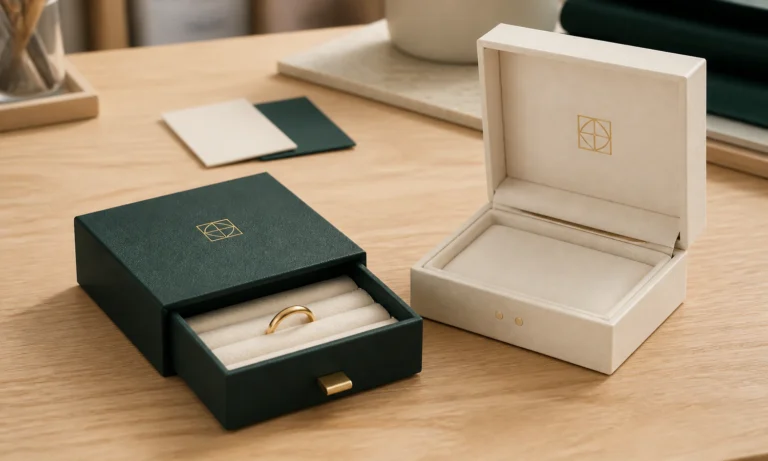
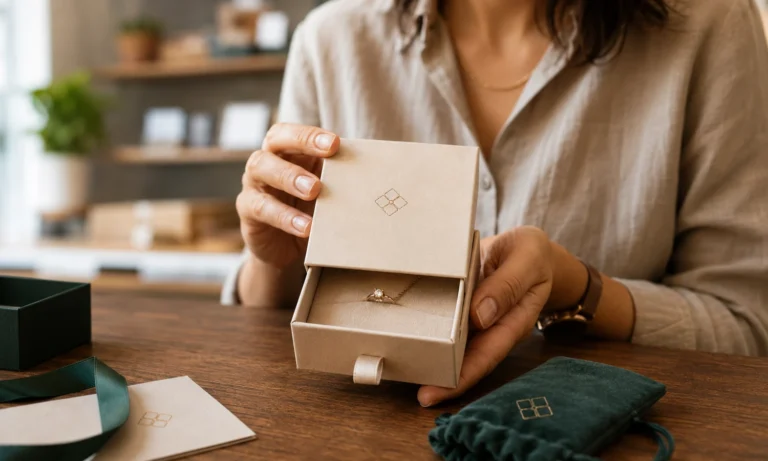
Two jewelry boxes can look similar in a photograph and still represent very different cost structures. One may use a standard rigid construction, a simple insert, and one logo application. Another may have a custom opening action, a textured covering, a fitted insert, several components, and additional protective packing for transit.
Appearance alone does not explain the quotation. Dimensions, structure, material, insert design, finishing, quantity, version count, sampling, packing, and shipping assumptions all matter. A change in one area can also affect another. A deeper insert may require a taller box. A taller box may change carton capacity. A different covering may need another finishing method or more careful protection.
This is why unit price alone is a weak basis for comparing custom jewelry packaging. The useful question is not only, “What does this box cost?” It is:
Which specification choices drive that cost, and which trade-off can change without weakening jewelry fit, brand consistency, or the customer experience?
This guide does not provide a universal price range. Instead, it explains the variables behind a quotation and shows buyers how to request comparable information from different suppliers.
The Main Custom Jewelry Packaging Cost Drivers
The importance of each variable depends on the project. Use this table to identify what should be written into the brief before asking suppliers to quote.
| Cost driver | What can change | What the buyer should confirm |
|---|---|---|
| Dimensions | Length, width, height, wall thickness, interior clearance | Finished exterior and usable interior dimensions |
| Structure | Lid-and-base, drawer, hinged, magnetic, folding, rigid, or multi-part construction | Construction drawing, opening action, closure, and assembly state |
| Base and covering materials | Paperboard, rigid board, paper, fabric, leather-like covering, wood, or other components | Component description, thickness or grade where relevant, color, and surface reference |
| Insert | Standard pad, die-cut cavity, wrapped insert, multiple parts, tabs, slots, cushions, or hardware | Jewelry fit, access, cavity layout, covering, and attachment method |
| Logo and finish | Printing, foil, embossing, debossing, coating, multiple positions, or combined effects | Final artwork, size, color, position, process, and approved reference |
| Quantity and versions | Total quantity, quantities by size, color, logo, market, or jewelry type | Quantity for every distinct version rather than one combined total |
| Sampling | Structural sample, material or color sample, branded sample, revision rounds | What the sample proves, what is excluded, and which changes require another approval |
| Packing and shipping | Individual protection, assembly, units per carton, carton dimensions, weight, destination | Complete pack-out, quotation basis, shipping assumptions, and exclusions |
A supplier cannot reliably align these variables from a mood board alone. The clearer the written brief, the easier it becomes to see whether two quotations describe the same packaging solution.
Why There Is No Standard Price—and How to Compare Quotes
“Custom jewelry box” is a product category, not a complete specification. A small paper-covered ring box with a standard insert is different from a fabric-covered presentation box with a connected lid, concealed closure, tailored insert, and several branded surfaces. Even when their external appearance feels similar, the construction and production requirements may not be.
Price can also be presented on different bases. One quotation may include a finished box, insert, logo, and individual protective sleeve. Another may exclude the insert covering, tooling, sample delivery, outer cartons, or freight. A lower number may therefore describe less scope rather than better value.
A useful comparison starts with one shared brief. Send the same essential information to every supplier and require written confirmation of any alternative.
At minimum, align:
- the jewelry type and actual product dimensions;
- the intended box size and opening structure;
- the exterior and interior material direction;
- the insert layout and holding method;
- the logo artwork, size, position, and finish;
- the quantity for each size, color, logo, or market version;
- the sample type and approval purpose;
- the individual packing and outer-carton requirements;
- the destination and requested delivery or freight basis.
If a supplier recommends a different material, insert, or structure, keep that proposal as a clearly labeled alternative. Do not silently replace the original specification and then compare its price with a quote based on the original design.
Ask each supplier to state what is included, which setup, tooling, sampling, packing, or delivery items are separate, and which changes would require a revised quotation. Also confirm whether the sample uses the same construction and process as the proposed production version. The objective is not to force every supplier into the same production method. It is to make the proposed outcomes and exclusions visible enough to compare.
1. Dimensions and Box Construction
Dimensions affect more than the amount of material in one box. They determine the usable interior, wall and lid proportions, insert size, component layout, individual protection, carton arrangement, and storage footprint.
Start with the jewelry rather than a preferred exterior size. Record the maximum product dimensions and any raised settings, posts, chains, clasps, cushions, cards, certificates, or accessories that must fit inside. Then establish the usable interior dimensions and clearance before finalizing the outside.
A few millimeters may seem minor on one sample, but repeated changes across length, width, and height can affect how many finished boxes fit inside an inner pack or outer carton. Do not enlarge the box “for safety” without checking the complete pack-out.
Structure changes the production and assembly path
A lid-and-base box, drawer box, hinged-lid box, magnetic-closure box, folding carton, and multi-part presentation case do not use the same components or assembly sequence. Cost may be influenced by:
- the number of separate parts;
- board cutting, grooving, wrapping, folding, joining, or hardware installation;
- the precision required for a sliding tray, lid alignment, hinge, closure, or reveal;
- whether the box is delivered assembled, partially assembled, or flat where the design permits;
- the number of surfaces that require accurate covering or finishing;
- the level of individual protection needed to avoid rubbing or marking.
Complexity should have a buyer purpose. A drawer may support a staged reveal. A hinged lid may support counter presentation. A magnetic flap may create a specific closing action. If a component does not improve product fit, workflow, presentation, or brand communication, ask whether it is necessary.
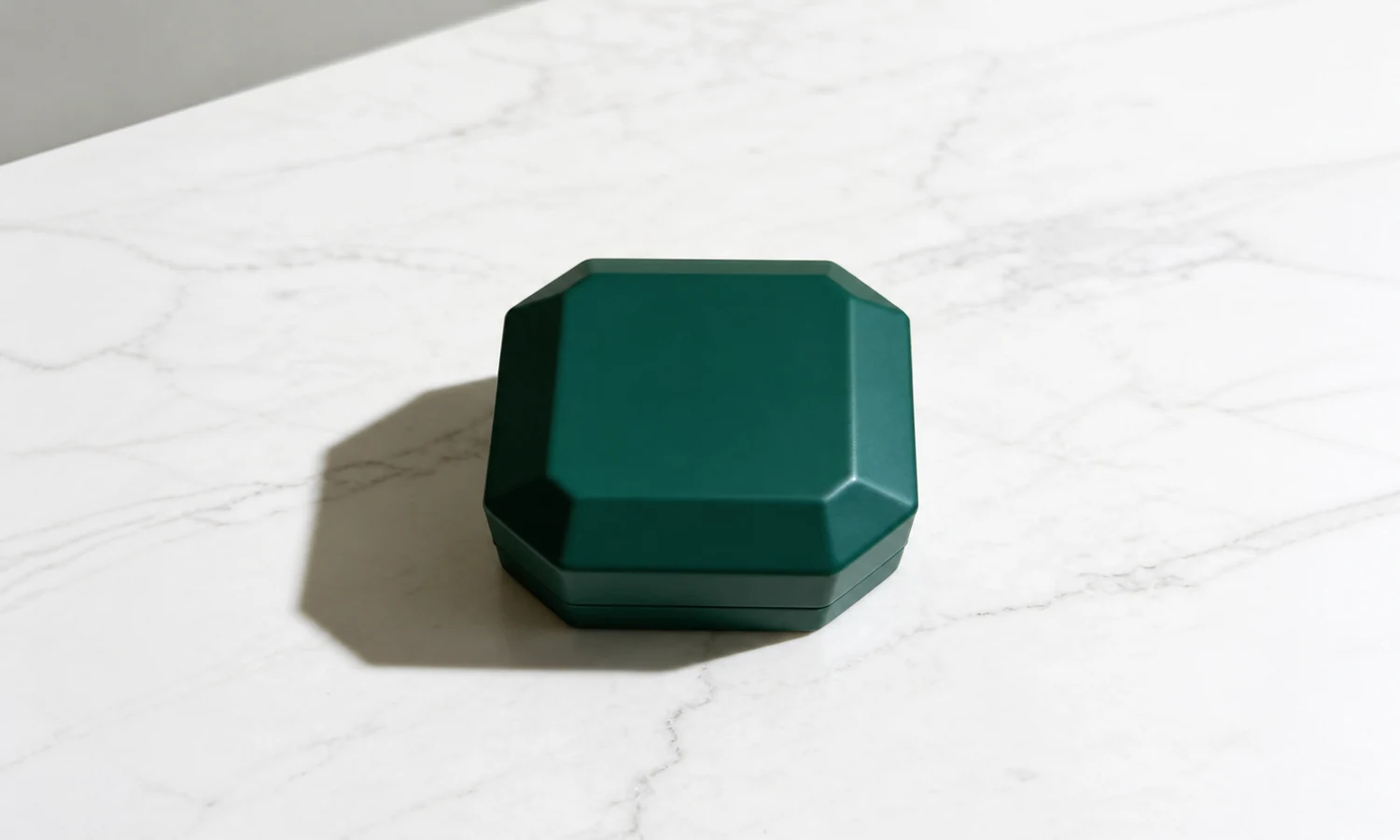
Buyers can review different custom jewelry boxes as a category reference, but the final quotation should still be based on the exact construction rather than the catalog name.
2. Base Materials and Surface Coverings
Material descriptions are often too vague to support a fair comparison. “Paper box,” “velvet box,” or “leather box” may describe only the visible surface, not the complete construction.
Ask the supplier to separate the main components:
- structural board or base;
- exterior covering;
- interior lining;
- insert core and insert covering;
- films, coatings, laminations, ribbons, magnets, hinges, or hardware where used;
- individual protective materials and outer packing.
Two coverings in the same color family may behave differently during wrapping, folding, finishing, cleaning, and quality inspection. A directional fabric, deep texture, reflective surface, or delicate finish may require more careful alignment or protection than a simpler paper covering. These effects are project-specific and should be confirmed on the actual sample.
Do not approve material from a screen alone. Request a physical swatch or relevant sample and review it under the lighting in which the box will be sold, displayed, or photographed. Confirm the approved reference by name, code, image, or retained sample so that “warm ivory,” “soft black,” or “linen texture” does not remain open to interpretation.
More expensive material is not automatically the better choice
The material should support the product and brand. A well-selected paper covering can be more appropriate than a more complex surface if it gives better color consistency, cleaner finishing, easier handling, or a clearer logo result. Conversely, a tactile fabric or another specialty covering may be justified when touch is central to the brand experience.
Evaluate the complete effect rather than ranking isolated swatches by price.
3. Insert Design and Jewelry Fit
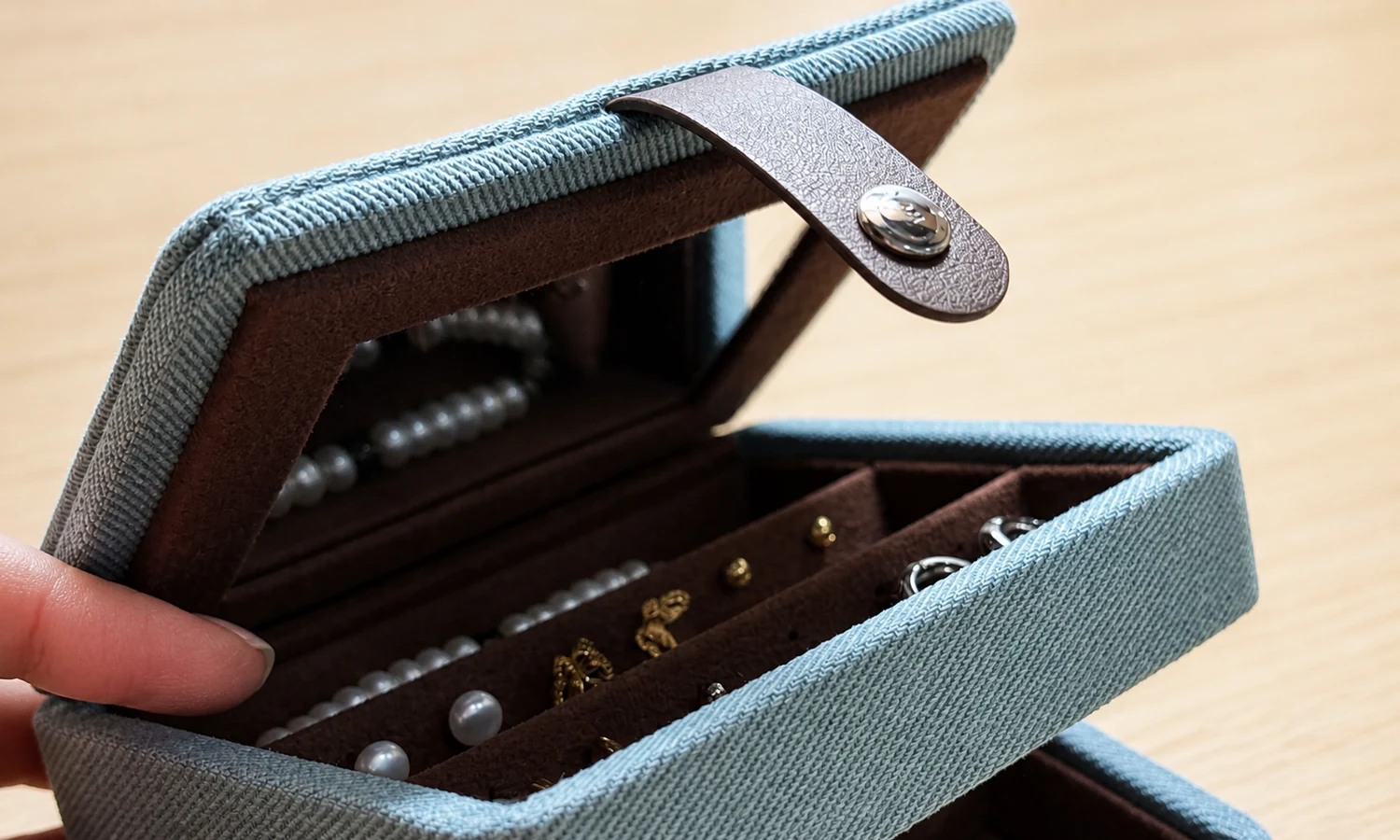
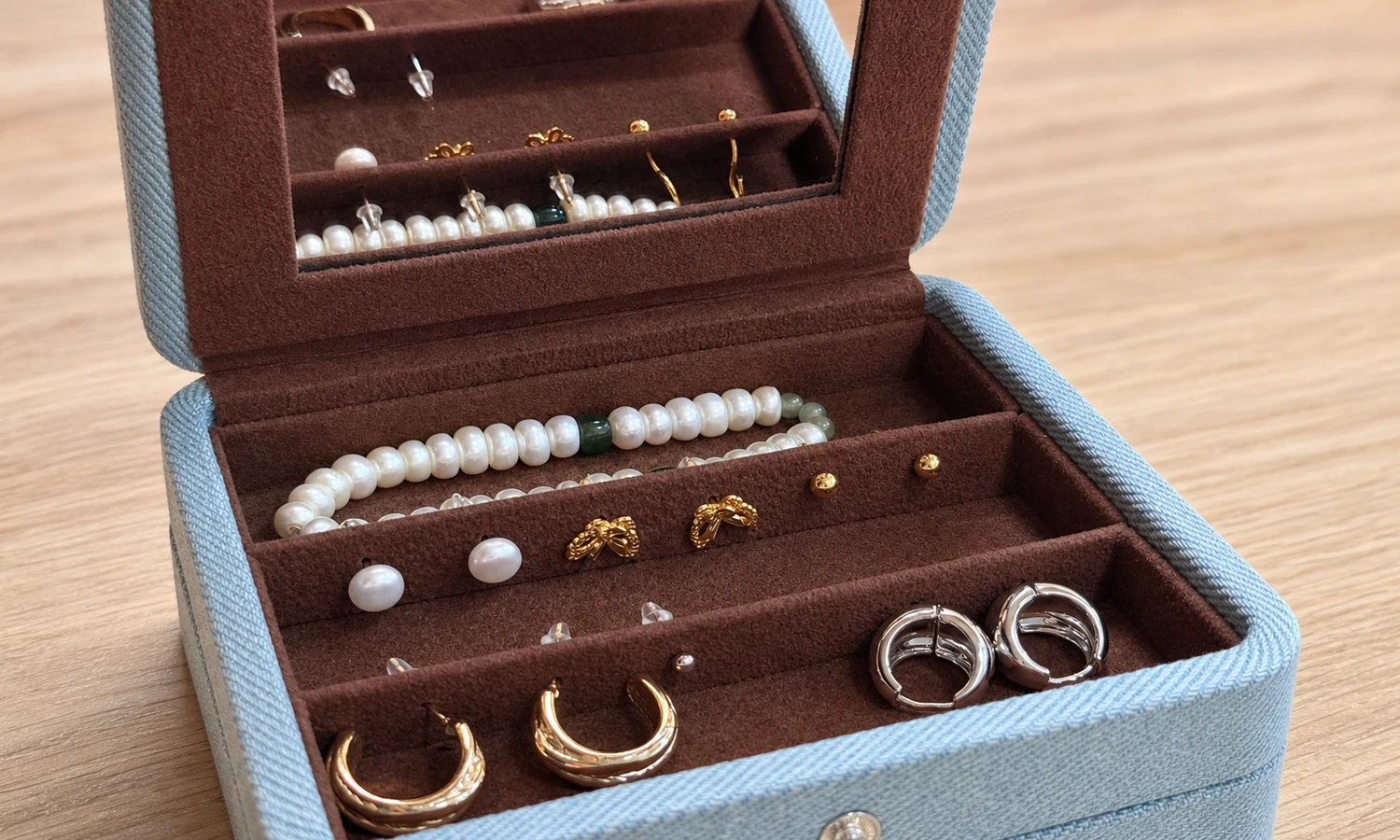
The insert is both a cost and performance variable. It is not merely a colored pad placed inside the box. It positions the jewelry, protects contact points, controls movement, supports presentation, and determines how easily the customer can remove the product.
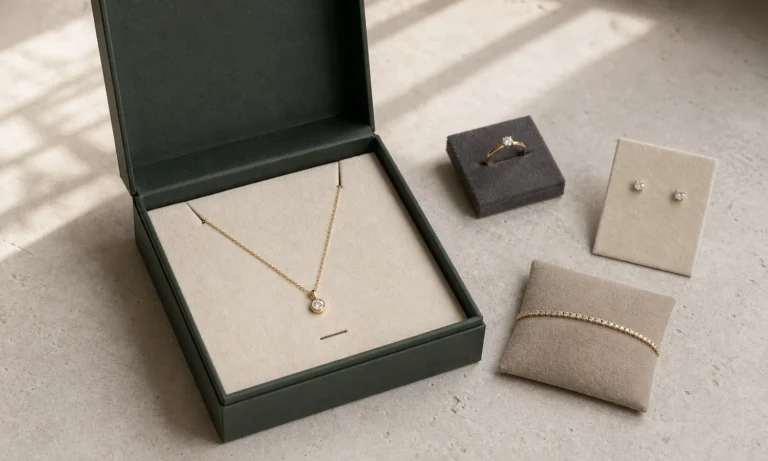
A simple flat insert may require relatively few operations. A tailored insert may include:
- a die-cut or molded cavity;
- several depths or supporting layers;
- necklace tabs and hidden chain space;
- ring slots, earring holes, bracelet channels, or watch cushions;
- fabric, velvet-like, paper, or other covering material;
- ribbons, pull tabs, elastic, clips, or removable parts;
- hand placement, wrapping, gluing, or alignment;
- different layouts for several jewelry sizes or product versions.
Each added feature should solve a real product-fit problem. A chain-retention slot may prevent tangling. Finger access may make a ring easier to remove. Extra clearance may protect a raised stone. A removable tray may support a secondary use. Decorative complexity without a clear function may add work without improving the experience.
Test the insert with the actual jewelry or a dimensionally accurate representative sample. Check the smallest, largest, tallest, and most difficult intended items. Confirm that the product stays in position during normal handling and that the customer can remove it without pulling the chain, touching a delicate surface, or deforming the insert.
Reducing insert cost by weakening product fit can create a more expensive problem later through rework, inconsistent presentation, or product movement. Preserve the functional requirements first, then simplify features that do not contribute to support or access.
4. Logo Application, Printing, and Finishing
Logo cost is not determined by the artwork size alone. The process, material, number of colors, coverage, positions, registration, tooling, setup, and inspection requirements can all affect the quotation.
Questions to confirm include:
- Is the logo printed, foil stamped, embossed, debossed, coated, applied as a label, or produced by another method?
- Is there one position or more than one?
- Is the artwork one color, multiple colors, or combined with another finish?
- Does the material hold fine lines and small details clearly?
- Does the logo cross a fold, edge, seam, texture, or closure area?
- Is the effect evaluated under direct light, side light, and normal viewing distance?
- Does each size or product version use the same artwork dimensions and placement?
Some decoration methods require a dedicated die, plate, screen, setup, or machine configuration. Digital processes may use a different preparation path from conventional printing or stamping. The appropriate route depends on the material, artwork, quantity, color requirement, and desired result; it should not be selected from a mockup alone.
Supply vector artwork and define the final dimensions and position. Approve the finish on the real covering material. A metallic effect on a smooth swatch may look different on a deep texture, while a subtle blind emboss may need controlled light to remain visible.
If the budget is under pressure, first ask whether the same brand signal can be achieved with one well-placed finish rather than several repeated logo applications. Do not reduce the logo until it becomes unreadable or move it to a surface that wears quickly during normal handling.
5. Quantity, Setup, and Version Count
Quantity affects how project preparation is distributed, but it should not be treated as a universal formula. Some work may happen once per design or production run: structural development, die or tooling preparation, color matching, artwork setup, machine changeover, and approval. Other costs change more directly with each unit.
When one-time preparation is spread across fewer units, the unit economics may differ from a longer run. However, a higher quantity also increases the total inventory commitment, warehouse requirement, and risk of unused packaging if the product, artwork, regulation, or campaign changes. The lowest unit price is not always the lowest-risk decision.
Version count can matter as much as the total quantity
Do not submit only one combined quantity when the project contains several versions. Separate the requirement by:
- box size;
- jewelry type;
- color;
- insert layout;
- logo or brand;
- language or market artwork;
- collection, season, or campaign;
- retail and e-commerce pack-out.
For example, a total request may appear large, but if it is divided among several sizes, colors, and logos, each version may require separate preparation, material planning, packing, or identification. Ask the supplier which elements can genuinely be shared and which must be treated as separate versions.
Plan a low-MOQ project around priorities, not only quantity
For a growing brand, the useful objective is often to protect cash flow and test the packaging system without approving unnecessary complexity. Possible questions include:
- Can several jewelry products share one exterior size while using different inserts?
- Can one covering and one logo finish work across the collection?
- Can the number of color or artwork versions be reduced for the first run?
- Is a stock-size or existing structural platform available for the required product fit?
- Which custom features are essential now, and which can be introduced after the packaging has been tested?
These options are not suitable for every product, and availability must be confirmed for the project. Buyers evaluating smaller initial runs can review low MOQ jewelry packaging as a solution path while keeping jewelry fit, materials, branding, and pack-out clearly specified.
6. Sampling and Revision Scope
A sample is not merely a smaller version of the final order; it is an approval tool, and its cost depends on what it must prove.
A project may use different sample stages for different questions:
- a structural mockup for dimensions and opening action;
- an insert test for product fit and removal;
- a material or color reference;
- a logo or finish test;
- a complete branded presentation sample;
- a pre-production reference where appropriate.
Before requesting a sample, define the acceptance criteria. State the jewelry used for the fit test, approved dimensions, material reference, logo artwork, finish, opening action, insert layout, cards or accessories, and individual packing.
Also ask which parts of the sample use the intended production construction and which are representative only. A prototype produced by a different method may be useful for structure but not sufficient for final color, finish, or consistency approval.
Revisions can affect more than sample delivery. A change to the jewelry dimensions may alter the insert. A deeper insert may alter the box height. A new logo size may require different tooling or placement. Record every approved change and request an updated specification before approving production.
When the project needs physical verification, request a packaging sample with a written list of what the sample must prove. Sample availability, charges, timing, and revision scope should be confirmed for the individual project.
7. Individual Packing, Carton Volume, and Shipping
The finished jewelry box is only one part of the delivered cost. Individual protection, inner packing, outer cartons, assembly state, carton capacity, gross weight, freight basis, and destination can all influence the complete procurement decision.
Ask for the proposed pack-out, including:
- whether each box is open, closed, assembled, or flat where applicable;
- tissue, sleeve, bag, corner, film, divider, or other individual protection;
- units per inner pack and outer carton;
- outer-carton dimensions and gross weight;
- orientation and dividers used to control rubbing or crushing;
- pallet assumptions where relevant;
- which freight, duty, tax, delivery, or handling items are included or excluded.
Shipping may be influenced by space as well as weight
Major parcel carriers use dimensional-weight rules for some services. This means a shipment may be assessed using the space it occupies rather than actual weight alone, depending on the carrier, service, destination, and customer agreement. Do not use one universal dimensional factor in the purchasing brief; request the applicable shipping basis for the real order.
The important design lesson is that box dimensions compound through case packing. A small increase across several dimensions can reduce units per carton or increase shipment volume. A visually minimal presentation box may still require generous outer protection, while a heavier compact box may create a different freight trade-off.
Compare the complete system:
- jewelry and insert;
- presentation box;
- individual protection;
- inner pack where used;
- outer carton;
- pallet or shipping configuration where relevant;
- destination and delivery basis.
Unit box price without pack-out information does not show the full packaging cost.
Control the Budget by Separating Must-Haves From Flexible Variables
Cost reduction is more useful when it follows a hierarchy. Start by protecting the requirements that make the package function, then review the variables that can change with less risk.
Usually protect first
These items often need to remain stable unless testing proves another solution works:
- jewelry fit, support, and removal;
- sufficient interior and lid clearance;
- an opening action appropriate for the sales channel;
- material and surface quality needed for the intended handling;
- legible, correctly placed core branding;
- protection through the real storage and delivery system;
- written approval of the final sample and specification.
Possible variables to review
Depending on the project, buyers may be able to simplify:
- the number of box sizes;
- the number of color, logo, or market versions;
- secondary logo positions;
- decorative layers that do not protect or communicate essential information;
- specialty components that do not improve the opening or display experience;
- oversized dimensions not required by the jewelry;
- separate structures that could share an exterior platform with different inserts.
Do not apply these changes automatically. Test each one against the product, brand, channel, and packing workflow. A simpler specification can still feel premium when the proportions, materials, insert fit, finish, and execution are coherent.
How to Request a Comparable Jewelry Packaging Quote
Use one written brief and request responses against the same fields.
Product and fit
- Jewelry type and SKU range
- Maximum product dimensions and weight where relevant
- Raised settings, posts, chains, clasps, cushions, or fragile contact points
- Required product orientation and removal method
Box and materials
- Exterior and usable interior dimensions
- Structure, opening action, closure, and assembly state
- Base, exterior covering, interior lining, and insert materials
- Approved color and texture references
Insert
- Cavity layout, depth, tabs, slots, cushions, and finger access
- Insert covering and attachment method
- Separate layouts required for different SKUs
Branding
- Vector logo file
- Final logo dimensions and positions
- Color and finishing method
- Artwork versions by size, market, or collection
Commercial and operational scope
- Quantity for each distinct version
- Sample purpose and required approval points
- Individual protection and packing method
- Units per carton, carton dimensions, and gross weight when available
- Destination and requested delivery or freight basis
- Clear list of included and excluded items
Ask each supplier to return an exceptions list. If the proposed quote changes the structure, material, insert, finish, packing, or delivery assumption, the difference should be visible before the prices are compared.
How to Review Returned Quotations
Do not build the comparison around price alone. Add three review columns beside every requirement in the brief: Confirmed, Difference or exception, and Evidence.
- Mark a requirement as confirmed only when the supplier has accepted it in writing.
- Record every alternative material, dimension, construction, insert, finish, packing, or delivery assumption rather than hiding it in notes.
- Attach the relevant drawing, swatch, artwork proof, sample plan, pack-out description, or quotation line.
- Compare the financial result only after the differences and exclusions are visible.
If two offers describe different products or delivery scopes, present them as alternatives rather than ranking them as though they were identical.
Common Custom Jewelry Packaging Cost Mistakes
Comparing quotes from closed-box photos alone
A closed image hides the board construction, insert, interior clearance, closure, hardware, protective packing, and assembly. Request open views, details, a drawing, and a sample.
Using vague material names
Words such as “premium paper,” “velvet,” or “leather-like” are not complete specifications. Record the exact component, color, texture, and approved reference.
Combining several versions into one quantity
Different sizes, colors, inserts, logos, or market artwork may require separate preparation. List each version and its quantity.
Approving an empty insert
An empty cavity may look neat while failing to support the actual jewelry. Test product fit, movement, access, and lid clearance before reducing insert requirements.
Ignoring individual protection and carton configuration
A delicate covering or finish may need added protection. The way boxes fit into cartons can affect volume, handling, and delivered cost.
Changing the design after sample approval without updating the specification
A small-looking change can affect another component. Record the revision, identify dependent changes, and confirm whether another sample or quote is required.
Selecting the lowest unit price before checking scope
The lowest unit price may exclude setup, tooling, insert covering, individual packing, samples, freight, or another required item. Compare the complete scope and the risks attached to each alternative.
Frequently Asked Questions
How much does custom jewelry packaging cost?
There is no reliable universal price. The quotation depends on the dimensions, construction, materials, insert, logo finish, quantity, version count, sampling, packing, destination, and delivery basis. Provide the same written specification to each supplier before comparing prices.
Does a lower MOQ always mean a higher unit price?
Not as a universal rule. One-time preparation may be distributed across fewer units, but the result also depends on the structure, materials, process, version count, and supplier’s production route. Compare both the total project commitment and the exact scope rather than assuming a fixed relationship.
Which factor has the biggest effect on custom jewelry box cost?
The leading factor varies by project. A large or complex structure may dominate one quotation, while a tailored insert, specialty covering, several finishes, multiple versions, or low carton efficiency may be more important in another. Ask suppliers to identify the variables that materially change their proposal.
How can a brand control packaging cost without lowering perceived quality?
Protect product fit, proportions, material execution, core branding, and delivery performance. Then review oversized dimensions, repeated logo positions, unnecessary decorative layers, too many color versions, or separate structures that could share a common platform. Approve every simplification through a real sample.
Why can shipping cost change when the jewelry box is not very heavy?
Some carriers and services consider dimensional weight, which reflects the space a shipment occupies. Presentation-box dimensions, individual protection, units per carton, outer-carton size, and destination can therefore matter alongside actual weight. Request the proposed pack-out and applicable freight basis for the real order.
Build the Quote Around the Packaging Specification
Custom jewelry packaging cost should be the result of a defined solution, not the starting point for guessing what the solution contains.
Begin with the jewelry, sales channel, insert function, opening experience, material direction, branding, quantity by version, sample purpose, and complete pack-out. Send the same brief to every supplier. Separate required features from flexible ones, and record every alternative before comparing the financial result.
For growing brands, a controlled first run can be more useful than chasing the lowest visible unit price. The goal is to learn which specification supports the product and brand while keeping the inventory and project scope manageable.
When the project requires a smaller initial commitment, use the low-MOQ planning questions above to define what must remain and what can be simplified. Then build your own jewelry packaging around the dimensions, structure, insert, materials, logo, and quantity needed for a comparable quotation.