How to Write a Jewelry Packaging Brief for Your Supplier

A jewelry packaging brief turns a visual idea into information a supplier can evaluate. It explains what the packaging must hold, how it should function, which brand details matter, and what the buyer needs to confirm before production.
Without that information, a supplier may quote the wrong size, assume an unsuitable insert, or recommend a finish that does not work well with the chosen surface. The result is usually more questions, less comparable quotations, and a sample that tests the wrong decisions. A useful brief does not need to solve every technical detail. It needs to make the buying problem clear.
What a Jewelry Packaging Brief Should Accomplish
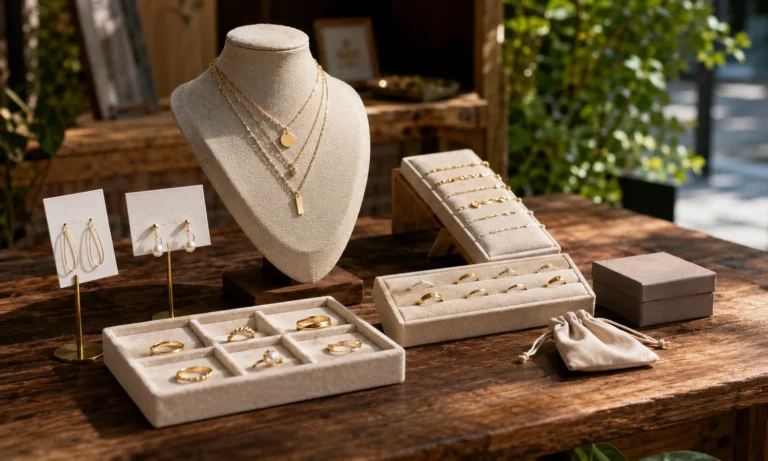
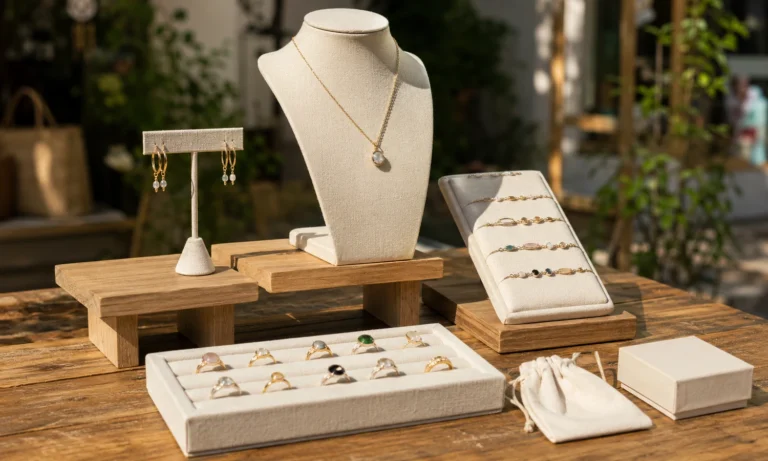
A packaging mood board communicates taste. A packaging brief communicates requirements. Both are useful, but they do different jobs. Reference images can show color, texture, proportion, and overall brand direction. The brief should explain which parts of those references are relevant and which are not.
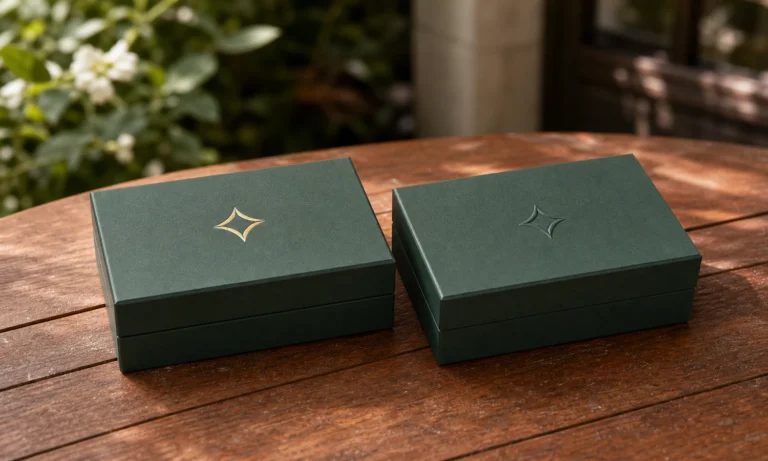
For example, you may like the muted green color in one image, the compact drawer structure in another, and the understated logo placement in a third. If the supplier receives only the images, they may assume you want to reproduce the entire design. A written brief separates the desired characteristics from the parts that are only inspiration.
A good brief helps the supplier:
- Understand the jewelry type, dimensions, weight, and handling needs.
- Recommend a realistic box, pouch, card, insert, or packaging combination.
- Identify missing information before preparing a quotation or sample.
- Compare materials and finishing methods against the same buyer priorities.
- Record what must be tested and approved during sampling.
1. Start With the Jewelry, Not the Box
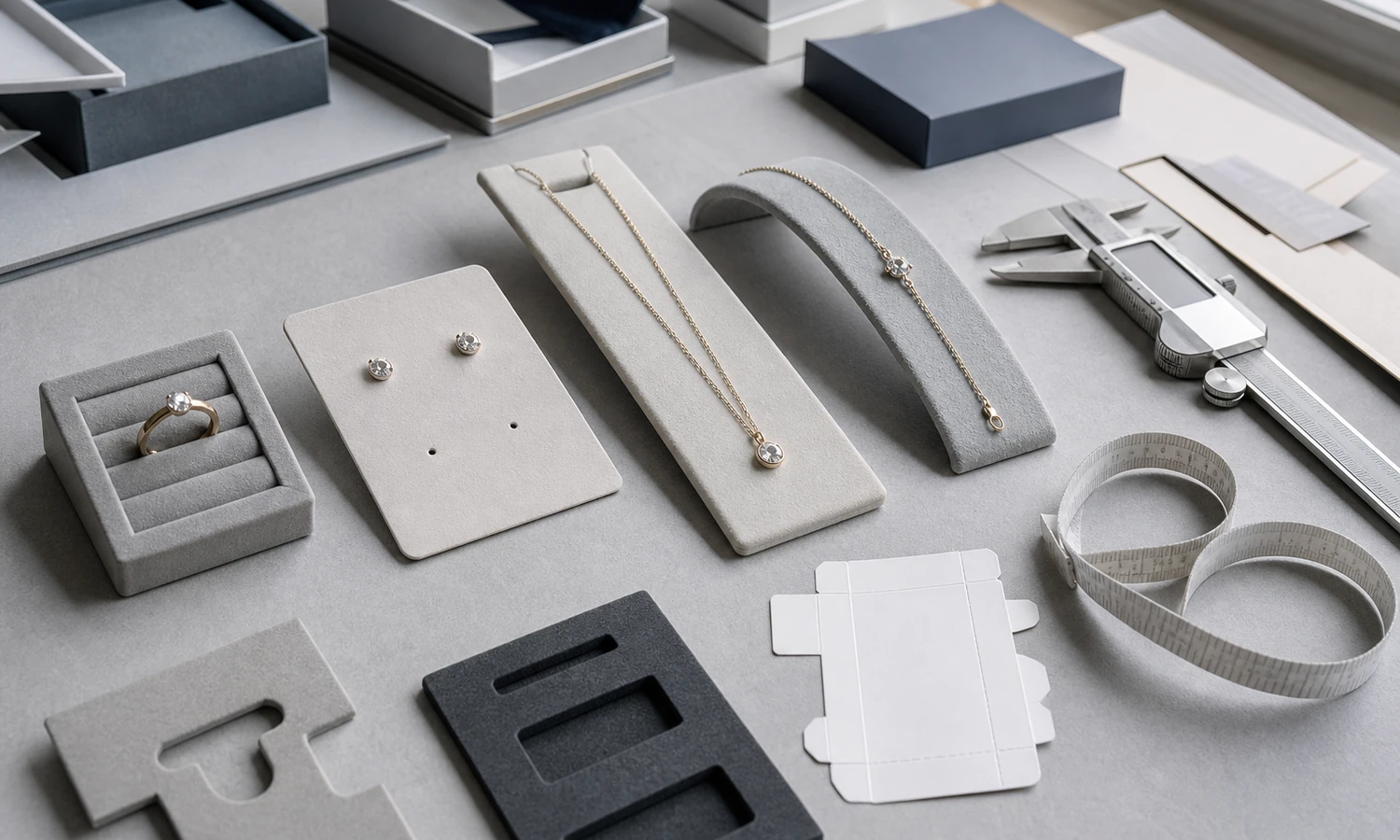
The first section of the brief should describe the item that the packaging must hold. A ring, a pair of stud earrings, a long necklace, and a rigid bangle create different requirements. The packaging should be designed around the actual product rather than around a generic internal size.
Provide the product dimensions in a consistent unit and state whether those measurements include tags, cards, protective sleeves, or other components. Include clear front, side, and top photographs with a ruler or another reliable size reference. For irregular pieces, a simple annotated drawing is often more useful than a polished product photograph.
Include these product facts:
- Jewelry type and the number of pieces packed together.
- Maximum length, width, depth, and relevant weight information.
- Delicate surfaces, sharp points, chains, clasps, or parts that can move or tangle.
- The position in which the jewelry should be presented when the package opens.
- Any card, certificate, care guide, tag, or accessory that must fit inside.
If one packaging design must serve several products, list every product and identify the largest and most difficult fit. Do not assume that a larger cavity solves every problem. Too much movement can weaken the presentation and allow jewelry to shift during handling.
2. Define the Sales Channel and Packaging Layers
The same jewelry may need different packaging for a boutique counter, a gift purchase, or an e-commerce shipment. Explain where the customer will first see the packaging and what happens to it before that moment. This helps the supplier distinguish presentation packaging from transport protection.
Primary presentation packaging
State whether the jewelry will sit in a rigid box, folding carton, pouch, card, tray, or another format. Describe the opening experience you want: a compact hinged reveal, a drawer pull, a removable lid, or a simple pouch opening. Include any practical limitations, such as shelf depth, display layout, packing time, or the need to store packaging flat.
Outer and shipping packaging
For direct-to-consumer orders, identify the outer mailer or shipping box separately. A presentation box should not be expected to absorb every shipping risk by itself. Tell the supplier whether the inner package will be placed inside tissue, a gift bag, a protective sleeve, or an outer carton. If several components must work together, provide the packing sequence.
3. Describe Structure, Material, and Interior Fit
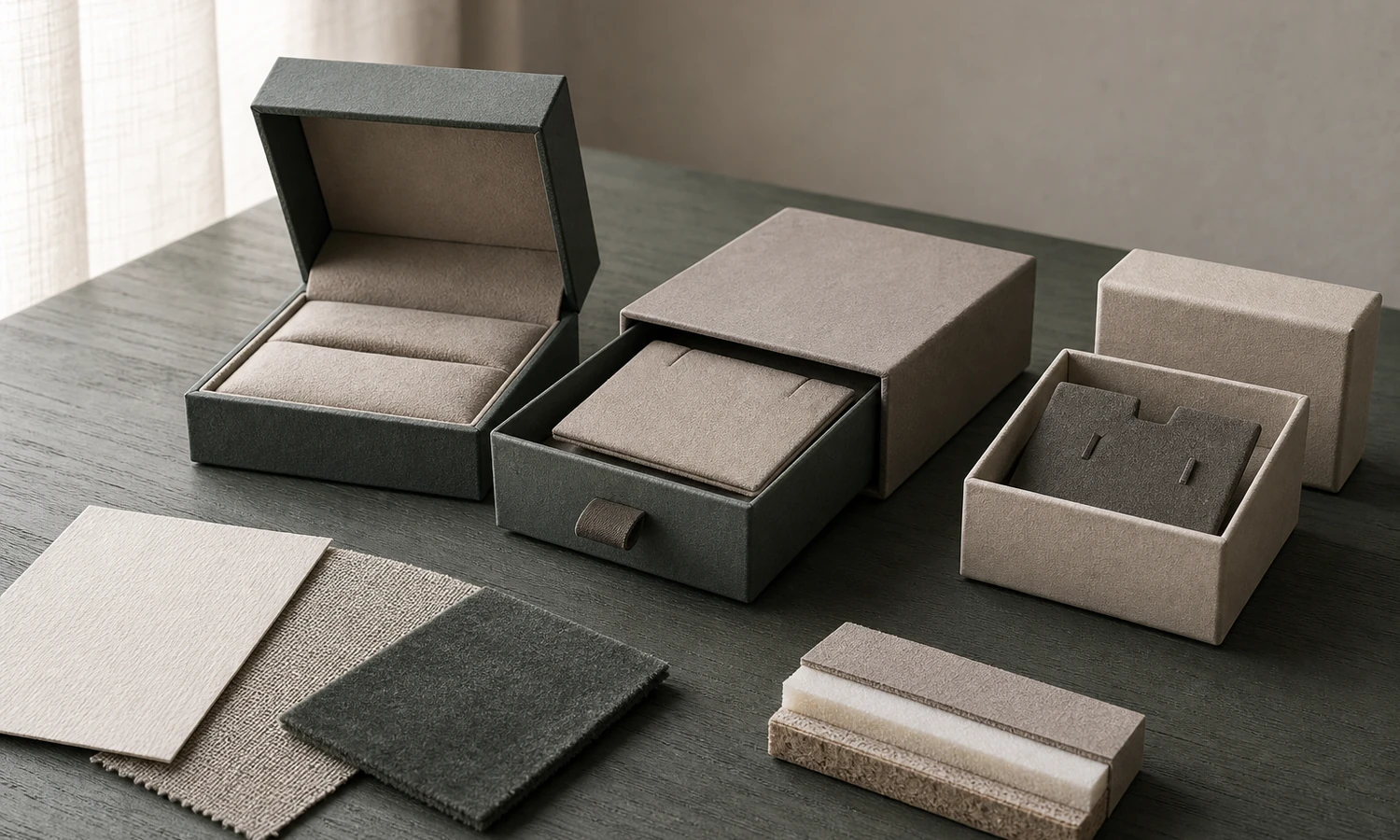
Buyers often write terms such as premium, luxury, minimal, or sustainable without explaining what those words mean for the project. Replace broad descriptions with observable priorities. For one brand, premium may mean a rigid structure and precise corners. For another, it may mean a quiet textured paper, a fitted insert, and a restrained logo.
Structure
Name a preferred structure if you have one, but also explain why you prefer it. Is the priority compact storage, a strong reveal, easy assembly, or a large branding surface? A supplier can suggest alternatives more effectively when the reason behind the choice is clear.
Exterior material and color
List the material families you are open to, such as paper-wrapped board, specialty paper, fabric, velvet, faux suede, or leatherette. Do not rely on screen color alone. Provide a physical reference, an approved swatch, or a recognized color specification where possible, and note whether exact matching or an acceptable tonal range is more important for the project.
Insert and lining
Explain how the insert must secure and present the jewelry. Include the desired product orientation, removal method, and visible surface. If you have a preference for foam, card, velvet-covered foam, faux suede, or another construction, state it as a preference rather than an untested instruction. The sample should confirm whether the insert is firm enough to hold the product while still allowing the customer to remove it comfortably.
If you are still comparing technical terms, use the ElevenPack Packaging Glossary to organize questions about structures, materials, inserts, and finishes before finalizing the brief.
4. Prepare Brand Assets and Finishing Instructions
Send the supplier the files they will actually need for production review. A small JPEG copied from a website may be useful as a visual reference, but it is not a reliable production artwork file. Provide the logo in a vector format when available, together with brand colors, minimum clear space, and any approved one-color version.
Describe where the logo should appear and what it should do. A lid logo designed for retail visibility may need a different scale from a quiet mark inside the box. If you are considering foil stamping, printing, embossing, debossing, a metal plate, embroidery, or another finish, ask the supplier to confirm compatibility with the selected surface and the level of detail in the artwork.
Include the following branding information:
- Vector logo files and an approved one-color version.
- Brand color references and any acceptable color tolerance notes.
- Preferred logo location, approximate scale, and orientation.
- Examples of finishes you like, with a note explaining what you like about them.
- Text, care instructions, legal copy, barcodes, or QR codes that must appear.
- Areas that must remain free of decoration or visible marks.
5. Share Quantity, Destination, and Target Date
Quantity affects which materials, structures, printing methods, and customization routes are practical. Provide an estimated order range rather than hiding the number until the final stage. If the project includes several box sizes or colors, break down the quantity by variation because the setup requirements may differ.
Also include the destination country and the date by which the packaging is needed. These details allow the supplier to discuss sampling, production, packing, and transport as separate stages. A target date is not the same as a guaranteed delivery date; it is a planning constraint that should be reviewed against the final specification and shipping method.
If the budget is still flexible, explain what you are trying to protect: unit cost, total project cost, a particular material, or a signature finish. This gives the supplier a clearer basis for alternatives. Simply asking for the cheapest option may remove the detail that matters most to the brand.
6. State What the Sample Must Prove
A sample is more useful when the buyer defines the questions in advance. Some samples are mainly for checking dimensions and structure. Others need to confirm color, texture, logo clarity, insert fit, or the complete opening experience. Record those priorities in the brief so the review is based on agreed criteria rather than a general impression.
Ask the sample to confirm:
- The jewelry fits without excessive movement, pressure, tangling, or difficult removal.
- The box opens and closes as intended and the structure feels stable in normal handling.
- The material, texture, and color support the approved brand direction.
- The logo size, position, line detail, and finish are legible and balanced.
- Cards, certificates, pouches, or accessories fit in the planned packing sequence.
- The presentation package fits the selected outer packaging where relevant.
When the project reaches this stage, use the Sample Request page to describe what you need to evaluate. Sample availability, cost, and timing should be confirmed for the specific project.
7. Use a Supplier-Ready Jewelry Packaging Brief Checklist
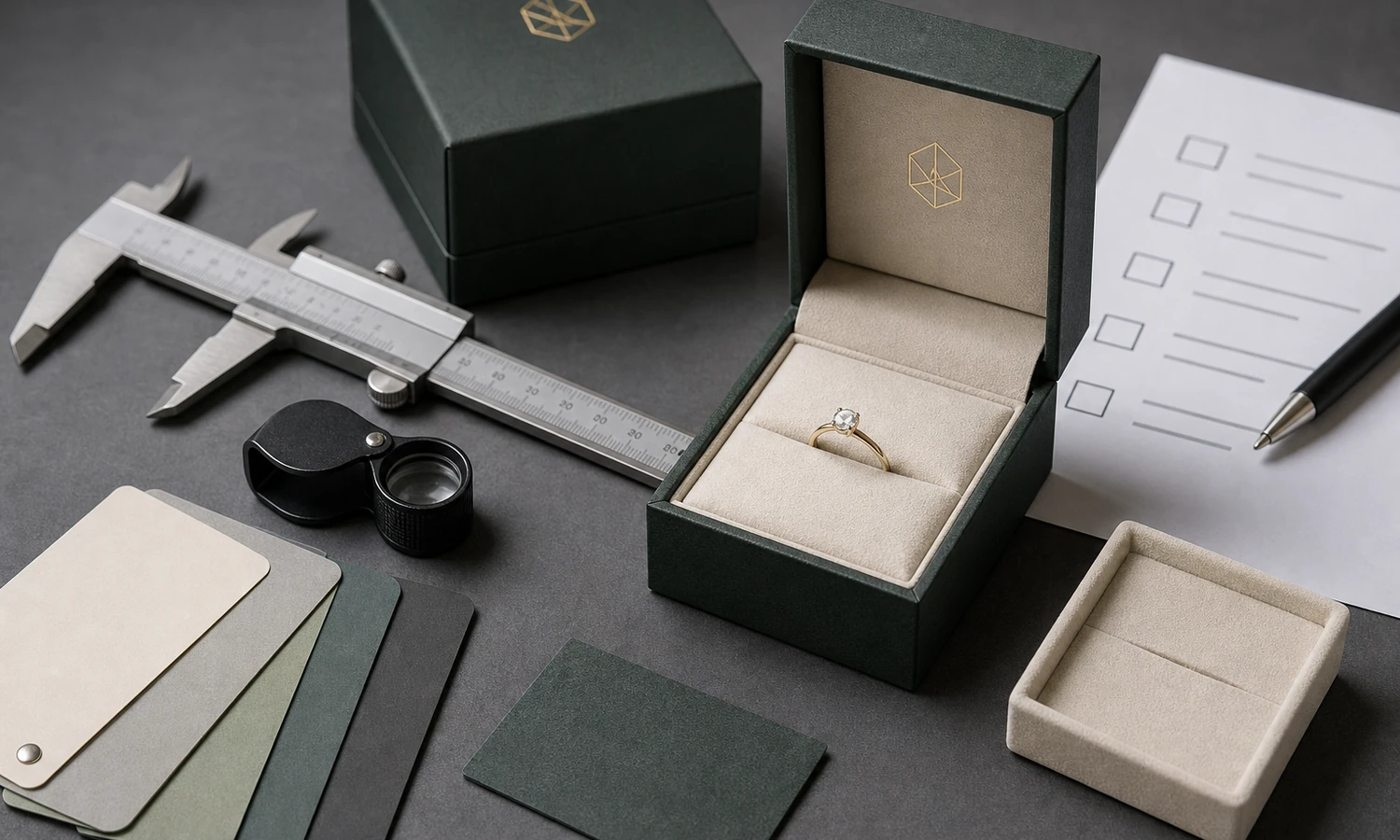
Before sending the request, check that the supplier can understand the project without guessing at its most important requirements. The following checklist can be used as the final page of a brief or as the structure of an inquiry form.
- Brand name, website, target customer, and product positioning.
- Jewelry type, dimensions, weight, photographs, and handling concerns.
- Preferred packaging format and the reason for that choice.
- Sales channel, presentation context, and complete packaging layers.
- Preferred structure, exterior material, color, lining, and insert requirements.
- Logo files, brand colors, placement, and finishing preferences.
- Estimated quantity by size, color, or design variation.
- Destination country and target use date.
- Reference images with notes explaining the relevant features.
- Sample goals, approval criteria, and decision makers.
- Questions that remain open and areas where supplier recommendations are welcome.
Common Briefing Mistakes to Avoid
Sending references without annotations
A collage of attractive boxes does not tell the supplier whether you care about color, structure, material, proportion, or logo placement. Add a short note to every reference and remove images that do not support a clear decision.
Using only external dimensions
The outer size does not confirm that the jewelry will fit. The insert, lining, wall thickness, cards, and accessories all affect usable internal space.
Treating all variations as one quantity
Different sizes, colors, logos, or finishes may require separate setup. Break down the order so the quotation reflects the actual configuration.
Approving a visual mockup as if it were a physical sample
A digital mockup can confirm layout direction, but it cannot prove material feel, color under real light, opening action, or insert fit. Keep digital approval and physical sample approval as separate decisions.
Frequently Asked Questions
Do I need to know the exact packaging structure before contacting a supplier?
No. Explain the jewelry, sales channel, brand direction, functional priorities, and constraints. A supplier can recommend structures more effectively when the buying goal is clear.
What file format should I use for a packaging brief?
A clear PDF is usually practical because it preserves layout and can combine text, measurements, images, and annotations. Keep editable artwork files separate and label every attachment clearly.
Should I include a target budget?
A budget range can help the supplier avoid recommending an over-engineered solution. If you prefer not to provide one, rank the priorities that should be protected if alternatives are needed.
Can one brief cover boxes, pouches, bags, and cards?
Yes, if the document shows how the components work together and gives each item its own specification, quantity, artwork, and approval criteria. A packaging system should be coordinated without treating every component as identical.
What should remain open for supplier recommendations?
Leave room for recommendations on material availability, construction details, insert engineering, finishing compatibility, packing efficiency, and alternatives that better support the project priorities. Mark these areas as open questions instead of leaving them unexplained.
Turn the Brief Into a Better Packaging Conversation
A useful jewelry packaging brief does not need to be long. It needs to connect the product, the brand, the customer experience, and the practical order requirements. When those connections are visible, quotations are easier to compare, samples are easier to evaluate, and both buyer and supplier can focus on the decisions that matter.
If you are preparing a new packaging project, use ElevenPack's Build Your Own Packaging form to organize the main requirements, or contact us to discuss the structure, materials, inserts, and branding details that still need review.